

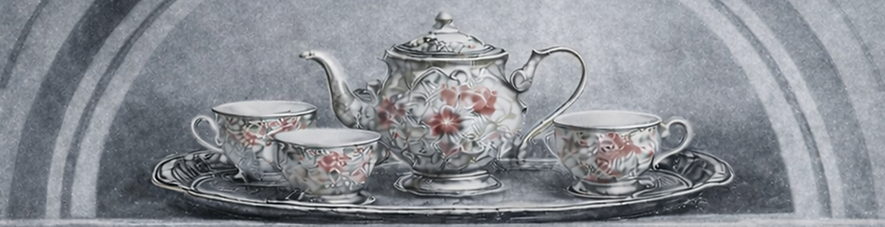
History of the mourning tea
Tea and Sympathy – we’ve all heard the expression, but have you ever wondered where it originated?
When Queen Victoria’s husband, Prince Albert, died in 1861, she went into mourning. Her grief was so deep that she slept with a death photo of the prince and dressed in all black, wearing a heavy black bonnet and veil, and a stiff crimped-crape collar and cuffs for the rest of her life. This monochromatic wardrobe of raven drab and without an ounce of shine was known as “widows’ weeds”. Known as Deep Mourning, the practice, was adopted by British women during the first year after the death of a spouse and included a strict withdrawal from social activities.
The year of Deep Mourning was followed by a somewhat less restrictive Second Mourning period. Still dressed in black, but without the veil and heavy crape, women could begin to receive visitors to the home, and wear other dark colors such as eggplant, mauve, and dark grey.
Second Mourning gave way to Half Mourning, where women could once again introduce muted pastel colors into their wardrobe, more decorative trimming and jewelry.
Mourning became a social activity unto itself, spawning all types of practices and mourning paraphernalia. A home would be draped in black and the shutters closed, with either black or white ribbons on the door. Items such as mourning stationery, mourning cigarettes, hair wreaths, and mourning rings were objects used to signal a public display of grief.
But even mourning could not stop the love of taking tea and it was still acceptable for women in mourning to participate under the guise of honoring the dead. Special mourning tea sets were made, special cookies baked and somber reflection on loss discussed over the inherently British ritual of the Tea.
For Questions or Additional Information, please contact
Kathy Sanders
936-522-8244 (cell) / kathy@steveandkathysanders.com